Introduction to Forest Park
Forest Park in Portland, Oregon, stands as one of America's most remarkable urban wilderness areas. Spanning 5,200 acres along the Tualatin Mountains, this vast green space offers over 80 miles of trails that feel worlds away from the city below. From easy riverside strolls to challenging woodland loops, Forest Park provides genuine hiking experiences within minutes of downtown Portland.
A Brief History
Origins and Protection
Forest Park's story begins with urban planning visionaries in the early 20th century who recognized the value of preserving Portland's hillside forests. The park was officially established in 1948, though conservation efforts began decades earlier. Today's boundaries protect one of the largest urban forest reserves in the United States.
Ecological Significance
The park preserves a fragment of the temperate rainforest that once covered the Pacific Northwest. Douglas firs reach heights of over 200 feet, while the understory hosts sword ferns, salal, and an incredible diversity of mosses and lichens. This living laboratory supports ongoing ecological research and environmental education.
Essential Trails
Wildwood Trail
The park's backbone, the 30-mile Wildwood Trail, traverses the entire length of Forest Park and beyond. Blue diamond markers guide hikers through endless green corridors of ferns and conifers. Most visitors tackle sections rather than the full route, with popular entry points at Pittock Mansion and Lower Macleay Park.
Lower Macleay Trail to Pittock Mansion
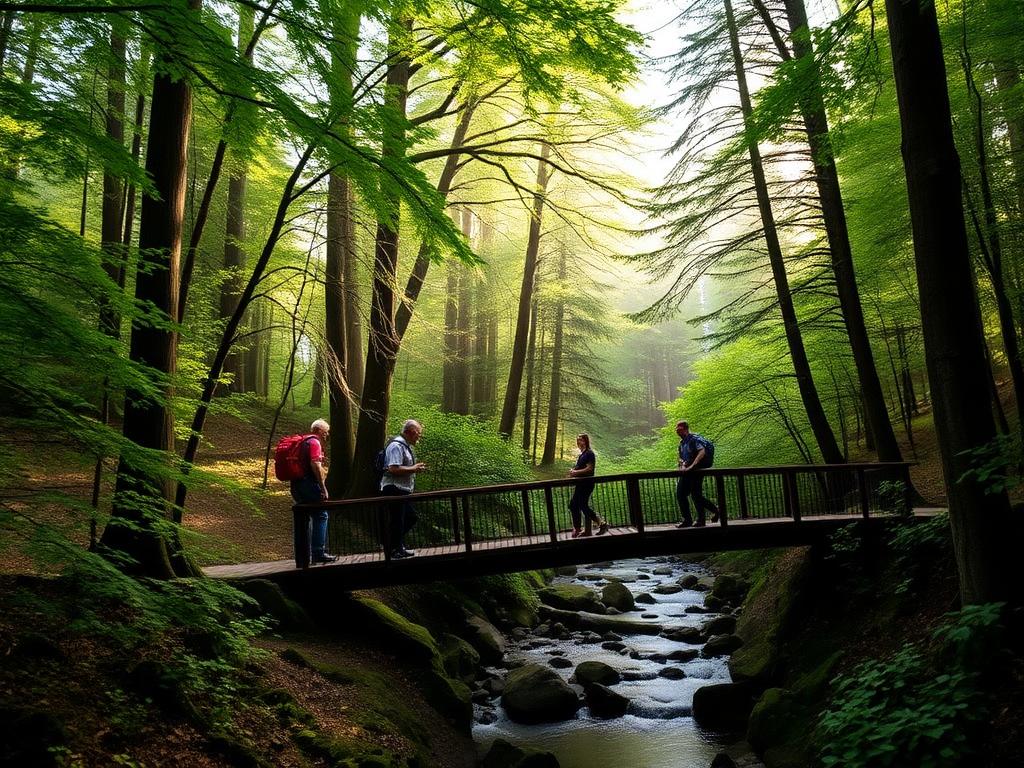
This 5-mile out-and-back route offers the quintessential Forest Park experience. Starting from NW Upshur Street, the trail follows Balch Creek through a fern-lined canyon, passes the iconic Stone House (the remains of a 1930s restroom building now reclaimed by nature), and climbs to the historic Pittock Mansion with its panoramic city views.
Leif Erikson Drive
This 11-mile gravel road is closed to motor vehicles, creating a wide, gentle path ideal for walking, running, and mountain biking. The consistent grade makes it accessible to all fitness levels while offering deep forest immersion.
Firelane Trails
A network of old fire roads crisscrosses the park, providing connecting routes between the Wildwood Trail and various access points. These wider paths suit those seeking easier navigation or space for side-by-side walking.
The Stone House Loop
A Forest Park Classic
This 6-mile loop combines the Lower Macleay Trail with the Upper Macleay and Wildwood trails to create a perfect half-day adventure. The route includes creek crossings, old-growth forest segments, and the atmospheric Stone House ruins.
What You'll See
The loop showcases Forest Park's diversity: riparian habitats along Balch Creek, mature Douglas fir stands on the upper slopes, and transition zones where deciduous maples and alders create autumn color displays.
Wildlife Encounters
Mammals
Black bears occasionally wander through Forest Park, though sightings are rare. More commonly, hikers encounter deer, coyotes, and the park's resident squirrels and chipmunks. Raccoons are abundant near creek areas.
Birds
Over 112 bird species have been recorded in Forest Park. Pileated woodpeckers, the largest North American woodpecker species, are frequently heard and occasionally seen. Great horned owls nest in the park's older trees, while varied thrushes provide a haunting soundtrack during winter months.
Amphibians
The park's streams support populations of native amphibians including Pacific giant salamanders, rough-skinned newts, and several frog species. After rain, these creatures are often spotted on trails.
Seasonal Experiences
Spring
Wildflowers carpet the forest floor from March through May. Trilliums are the signature bloom, joined by fawn lilies, bleeding hearts, and candy flowers. This is also prime season for waterfall viewing as streams run full from winter rains.
Summer
While Portland summers can be warm, the forest canopy provides natural air conditioning. Trails are dry and accessible, though water levels in creeks are lower. Early morning or evening hikes avoid peak afternoon heat.
Fall
Big-leaf maples turn golden yellow, creating stunning contrast against evergreen conifers. Mushroom season brings an incredible variety of fungi, though collection is prohibited. Fall brings the best weather for longer hiking days.
Winter
Portland's mild winters mean year-round hiking, though trails can be muddy and wet. The forest takes on a different character, with moss-covered trees, dramatic cloud formations, and the occasional snowfall at higher elevations.
Practical Considerations
Trailhead Access
Forest Park has over 30 official access points, with parking available at major trailheads. Popular starting points include Hoyt Arboretum, Lower Macleay Park, and the Leif Erikson Drive gate at NW Thurman Street.
What to Wear
Waterproof layers are essential year-round – Portland's weather can change rapidly. Sturdy hiking shoes with good traction handle muddy conditions better than trail runners. In summer, lighter clothing suffices, but always pack an emergency layer.
Navigation
While main trails are well-marked, the extensive network can be confusing to newcomers. Download offline maps or carry a dedicated trail map. The Forest Park Conservancy produces excellent resources, and their website offers suggested routes for all skill levels.
Safety Guidelines
Trail Etiquette
Yield to uphill hikers, announce yourself when passing, and keep dogs leashed. While mountain biking is permitted on specific trails, hikers have the right of way. Some trails are pedestrian-only – respect the designations.
Wildlife Awareness
Although large predator encounters are extremely rare, basic wildlife awareness applies. Make noise on the trail, travel in groups when possible, and never approach or feed wildlife. Bear sightings should be reported to Portland Parks.
Weather Preparation
Rain can arrive suddenly, and trails become slippery when wet. Lightning is rare but possible – if storms threaten, seek lower ground away from tall trees. Summer brings fire risk – check current conditions during dry periods.
Beyond Basic Hiking
Trail Running
Forest Park has become a trail running destination, with events throughout the year and a dedicated running community. The varied terrain provides excellent training for everything from 5Ks to ultramarathons.
Birdwatching
The Audubon Society of Portland manages a sanctuary adjacent to Forest Park, offering educational programs and guided bird walks. Spring migration brings the best variety, but year-round residents ensure something's always singing.
Nature Photography
The combination of ancient trees, fern-filled understories, and atmospheric mist creates endless photographic opportunities. Overcast days actually enhance forest photography by eliminating harsh shadows.
Conclusion
Forest Park proves that genuine wilderness can exist within an urban context. These 5,200 acres of protected forest provide Portlanders with daily access to experiences that other cities can only dream of – quiet trails beneath towering trees, wildlife encounters, and the peace that comes from immersion in nature. Whether you're seeking a quick lunch-hour walk or an all-day forest adventure, Forest Park delivers an urban hiking experience truly unlike any other.